Music journalism, books and more
David Wiffen - A singer-songwriter's beautiful sadness

Canada’s musical landscape in the early 1960s was dotted with smoky coffeehouses with folky minstrels inside, singing their hearts out to audiences hungry for emotional authenticity. This was the fertile ground from which sprang future icons such as Ian & Sylvia, Gordon Lightfoot and, later, Leonard Cohen, Joni Mitchell and Neil Young.
One of the brightest stars to emerge from that scene was David Wiffen. A dashing British émigré, Wiffen possessed all the qualities needed for fame and fortune. Tall, handsome, nattily attired and blessed with a captivating stage presence and a deep, stop-you-dead-in-your-tracks voice, he also had the songs — rich, blues-based confessionals about loss and longing that he sang with a bracing conviction.
In time, after crisscrossing the country and appearing both on his own and in various musical groups, Wiffen released two solo albums in the early 1970s. His songs, including “Driving Wheel” and “More Often Than Not,” stood out for their unvarnished honesty and were quickly covered by artists ranging from Tom Rush and the Byrds to Anne Murray and Harry Belafonte.
But, for all his promise, Wiffen wasn’t nearly as prolific in songwriting as his more successful contemporaries. “David was always working on something,” observed his longtime guitarist and close friend Frank Koller, “but it took time for him. He wasn’t pumping out the songs the way the music business demanded. That let him down and really frustrated him.”
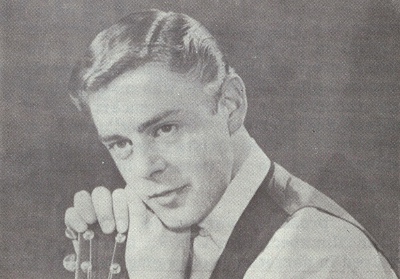 As he watched the careers of Lightfoot, Ms. Mitchell and others soar, Wiffen endured the indignities of excessive one-nighters and frequent missed opportunities. Making things worse, he increasingly succumbed to alcohol to ease the pain of hardships and heartaches. For a time, he quit the stage altogether.
After he finally got sober in 1990, at the insistence of his wife, Joanne, whom he met in 1979, Wiffen’s outlook improved dramatically. A new generation was discovering the power of his songs, through covers by bands such as Cowboy Junkies, the Jayhawks and the Black Crowes, and the composer himself returned to songwriting, performing and recording. With his comeback, the accolades poured in, proving just how much he had been much missed.
When Wiffen died at 84 on April 5 in Ottawa’s May Court hospice, after a short illness, admirers far and wide paid tribute to a gifted, beloved musician whose talent moved so many.
From his home in High River, Alta., renowned guitarist Amos Garrett recalled first seeing Wiffen around 1962 at Toronto’s Bohemian Embassy. “I remember thinking, ‘Wow, a white guy that can really sing the blues — and not one of those phony ‘growlers’ that you hear, but a real natural.”
Hamilton’s Tom Wilson, who sang Wiffen’s “Skybound Station” on Blackie & the Rodeo Kings’ 1999 album Kings of Love, calls the musician a friend and mentor and his earth-splittingly deep vocals a major influence. “David Wiffen had a voice that, I swear to God, could part Lake Ontario. It was unbelievable,” he said. Wilson says he plans to record an entire album of Wiffen songs in the future.
Canadian Music Hall of Famer Bruce Cockburn, who produced Wiffen’s classic Coast to Coast Fever album and now lives in San Francisco, recalls last seeing Wiffen at a 1997 reunion of their Ottawa group the Children. “We’d all aged some,” he admitted, “but David’s golden voice and presence were strong and graceful.” Added Cockburn: “A good man, a good songwriter and a beautiful singer [who] walked a hard road can now be at peace.”
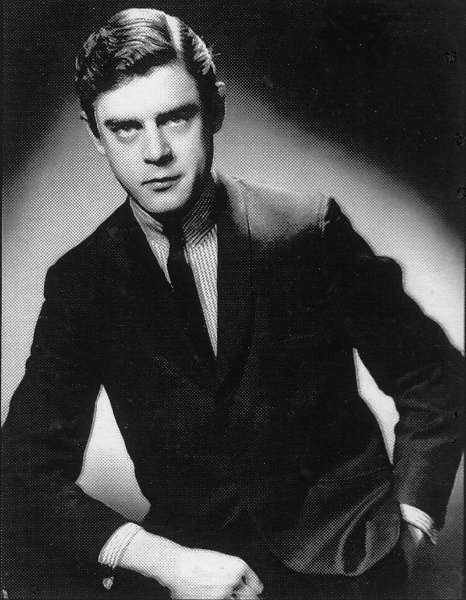 David George Wiffen was born on March 11, 1942 in Redhill, Surrey, England, the first of two sons born to civil engineer Cecil Wiffen and his wife, Joan (née Austin), a homemaker. After the war, the Wiffens relocated to London and, in 1954, settled in Claygate, a tony suburban village in Surrey, southwest of London. There, young David attended the Hinchley Wood school but soon had his teenage head turned by a television appearance of U.S. blues singer Bill Big Broonzy. With England’s skiffle craze in full roar, Wiffen promptly joined the Black Cat Skiffle Group as its singer, and played a tea-chest bass built by his father, according to younger brother Graham.
But David’s ambition to become the next Lonnie Donegan was cut short when Cecil landed a job in Toronto and the family flew over to join him. Still, David soon found his footing in the city’s burgeoning coffeehouse scene, taking up the guitar and singing blues covers at places like the Village Corner. At the Corner, he witnessed early performances by and shared stages with Ian & Sylvia and Lightfoot, and befriended folksingers Jim McCarthy and Denny Doherty, the latter of future Mamas & the Papas fame, with whom he used to go on double dates.
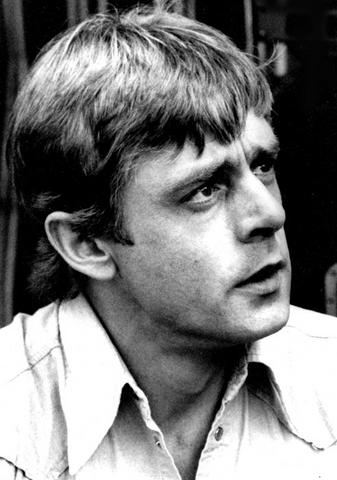 Catching the Kerouac bug, Wiffen hit the road and first travelled west in 1962, hitchhiking to Alberta. He later made another, longer trip there at the start of 1964. returning to Calgary, where for nine months he managed the Depression folk club. Vancouver folksinger Brent Titcomb remembers encountering Wiffen in a radio station there at the time and being struck by his cool air of sophistication. “David was very cultured, well-spoken and wearing a tweed jacket and a tie with a Windsor knot, and I was like a country bumpkin by comparison,” Titcomb said. “But we shared a wacky sense of humour and hit it off. Watching him perform taught me how to cast a spell and get an audience in the palm of your hand.”
 Wanting to reunite with his best friend, McCarthy, Wiffen continued on to Vancouver, where the two performed at local clubs. Exactly what Wiffen sounded like at this point can be heard on At the Bunkhouse Coffeehouse, a recording he made for the venue’s proprietor, Les Stork. It features stark covers of songs by Ian Tyson, Bob Dylan and Leadbelly, along with a moody, heartfelt jazz standard and Wiffen’s first composition, the bluesy “Slice of Life,” all sung in his deep, sonorous baritone. With only 100 copies originally pressed, the album was barely heard and became a much sought-after collector’s item, until it was reissued in 2021.
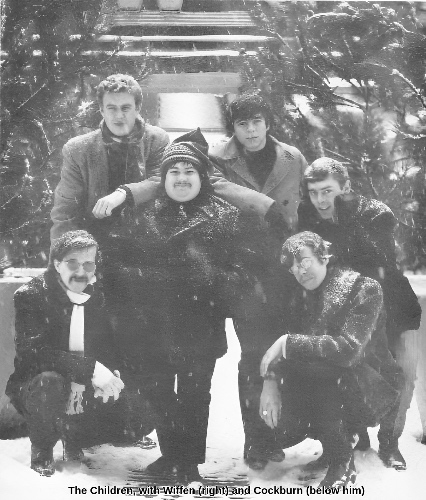
For the next several years, Wiffen found comfort in the company of other musicians. After becoming lead singer for the Pacers, a boisterous R&B band from Prince George, which recorded one single and travelled east on an ill-fated tour, he settled in Ottawa and joined Cockburn, Sandy Crawley, poet Bill Hawkins and others in the adventurous folk-rock group the Children. One of the band’s highlights: opening for the Lovin’ Spoonful at Toronto’s Maple Leaf Gardens.
Looking for better gigs, Wiffen then teamed up with Titcomb and his partners Donna Warner and Trevor Veitch in the group 3’s a Crowd. With a major record deal and solid management, the group offered new opportunities. Said Titcomb: “We loved David and even though he had his demons and struggles with drinking, we hoped the group would offer stability and a chance for him to find sobriety.”
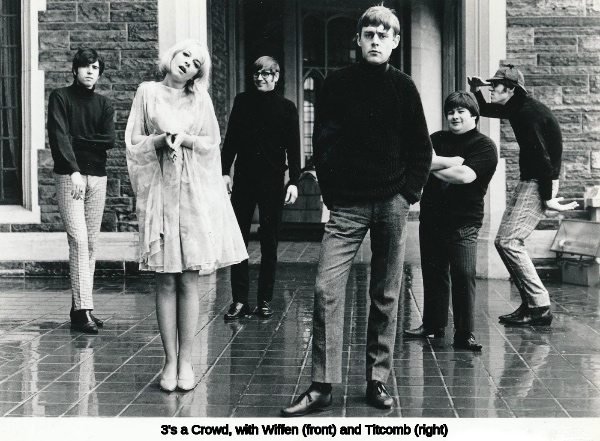 Produced by Doherty’s musical partner Mama Cass Elliot, the 3’s a Crowd album Christopher’s Movie Matinee featured Wiffen singing lead vocals on several tracks, including his own “I Don’t Want to Drive You Away,” later recorded by Ms. Murray as “David’s Song.” After the original three members split, Wiffen stayed on with new recruits Colleen Peterson and Cockburn long enough to take advantage of appearances on a 26-week TV series called One More Time. But what next?
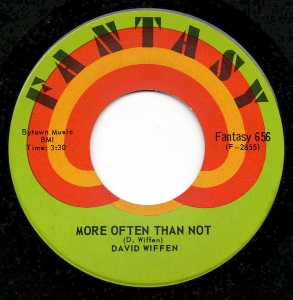
Back in Ottawa, living in a friend’s basement and full of despair about an uncertain future, Wiffen wrote something that expressed his exhaustion and existential angst in the question, “Have I not been far enough?” The song, “More Often Than Not,” continues: “So pass that bottle, now give it here/So many reasons to drink it dry now/Ease my pain, maybe even kill me/Have another one, let’s go.” It became one of his signature songs and appeared on his 1971 self-titled album, along with the popular “Driving Wheel,” and the autobiographical Mr. Wiffen (Is Incommunicado Today),” which Belafonte covered. Sadly, although “More Often Than Not” became a minor hit in Canada, the album did nothing south of the border.
Click to see Wiffen perform “More Often Than Not”
 Wiffen had better luck with his next album, Coast to Coast Fever. With Cockburn’s sympathetic hands at the controls and on tasteful guitar accompaniment, the recording captured all of Wiffen’s strengths in haunting, soul-baring numbers like “Smoke Rings,”“Climb the Stairs” and the piano-laced “Full Circle,” which opens with the poignant lines “When baby says she loves you and you’re many miles from home, the silences grow longer and you can’t put down the phone.” The recording was nominated for a Juno Award in the folk album category in 1974, but lost out to Lightfoot’s Old Dan’s Records. Another setback led to more disillusionment and drinking.
Click to see Wiffen perform "Lucifer's Blues"
Wiffen, who was later diagnosed with bipolar disorder, spoke candidly to this writer in 1996 about the toll of his alcohol problem. “I don’t mind people knowing that I’m now a recovering alcoholic — I’m proud that I am,” he said. “But back in the ’70s, the press made it harder. I remember during a promotional tour for Coast to Coast Fever seeing a headline in the Ottawa Citizen saying, ‘Alcoholic Wins Battle with Demon Rum.’ My parents were living here in those days. Seeing that was harder than getting myself better, because I worried it reflected badly on them.”
Quitting music in the ’80s, Wiffen took work briefly as a limousine chauffeur to support his wife, followed by a stint as a Para-Transpo driver for the handicapped — until he injured his back pushing a large person in a wheelchair up a steep driveway and needed spinal surgery.
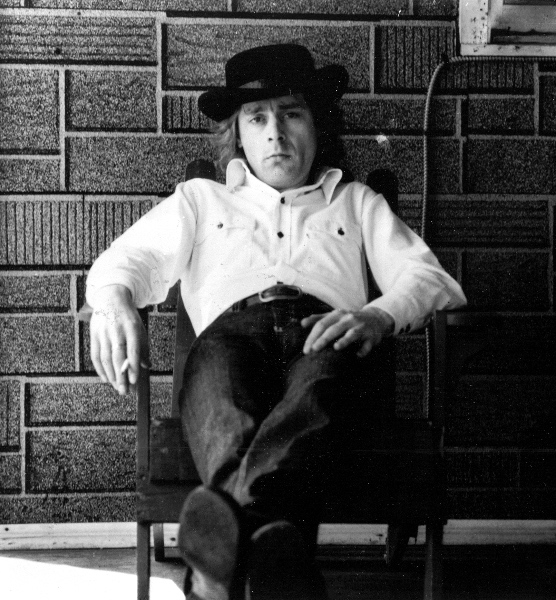 So Wiffen, a voracious reader of thrillers and historical fiction, put his creative energy into writing poetry, painting and wood sculpting and later returned to music at his wife’s urging. With the release of several late career recordings, including South of Somewhere and Songs from the Lost and Found, critics praised the appearance of rerecorded classics alongside strong new compositions.
Wiffen lived to see a number of tributes paid to him, including an all-star celebration at Toronto’s Hugh’s Room in 2015 and a David Wiffen Day declared by the City of Ottawa four years later. Although the volume of his compositional output never rivaled that of his contemporaries, the 46 published and recorded songs in his slim catalogue rank among the best ever to come out of Canada.
Said Koller, who noted that his friend was always an essentially happy man, despite the often dark tone of his songs: “David could express pain and a sense of melancholy in the human spirit like nobody else. And it was genuine. When he picked up his guitar, that’s what came out — a profound and beautiful sadness.”
Wiffen leaves his brother, Graham Wiffen, and his wife, Joanne.
Originally published in The Globe and Mail 11 April 2026