Music journalism, books and more
Richard Manuel - The Band's Unsung Hero

As a member of the Band, Richard Manuel gave the group its most soulful vocals and its signature bluesy backbone through his gritty, syncopated keyboard work. Although his role was huge, he never received the recognition he deserves, partly due to his own self-effacing nature and because, as his admirer Eric Claption put it, Manuel became "defined by his tragic end."
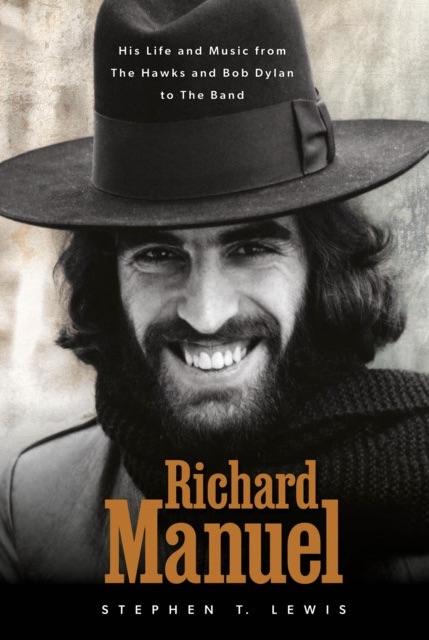
That may change with Stephen Lewis' recent biography of the Band's unsung hero. Drawing from Levon Helm's book This Wheel's On Fire, Robbie Robertson's Testimony and the Daniel Roher-directed documentary Once Were Brothers, as well as interviews with Manuel's family and former bandmates and friends from his teenage years, and such luminaries as Clapton and Van Morrison, Lewis paints a revealing portrait of a troubled genius who never knew the depth of his own talent.
Lewis charts Manuel's journey from his hometown of Stratford, Ont. to Woodstock, N.Y. and beyond, showing how his prodigious abilities carried him from his group the Revols into Ronnie Hawkins' Hawks and then around the world with the Band. Manuel's contributions extended from his songwriting, alone and with Robertson, to his leadership in the studio on recording arrangements. As Lewis points out, on the Band's masterpiece "The Weight," Manuel brought "the influence of gospel and layered harmonies of his churchgoing days in Stratford," and could sing all of the parts, from the highest to the lowest, and show the other Bands members what to sing.
Of all Manuel's songwriting on Music from Big Pink, which includes "In a Station," "We Can Talk" and "Lonesome Suzie," his collaboration with Bob Dylan on "Tears of Rage" stands out for what Lewis calls "the perfect marriage of Manuel's "acute melodic acumen and Dylan's advanced lyrical expression." For Lewis, the song reflects Dylan's description of his songwriting partner as a "distinctive voice with an unquiet heart."
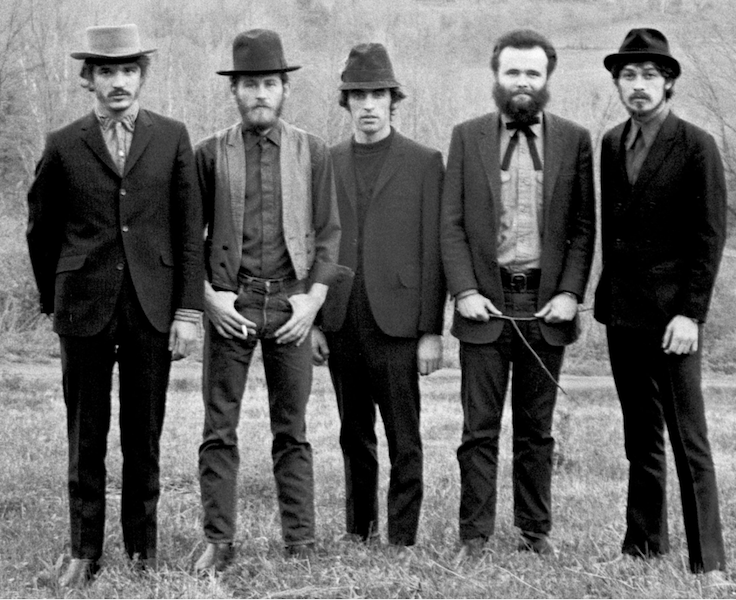 The biography doesn't shy away from examining Manuel's "unquiet heart." Lewis details how Manuel's insecurity, perfectionism and inability to cope with newfound fame fuelled his descent into drug use and alcoholism. The more he drank and anesthetized himself with drugs, the less he contributed to his family and musical colleagues and the more guilt he felt as a result. Writes Lewis: Manuel "held himself to unrealistic expectations and more and more frequently came up short."
Adds Lewis, "Therein lies the essential tragedy of [Manuel] and the Band: while Robertson was peaking creatively and immersing himself in film, books and social circles that would help him realize his greater ambitions, [Manuel] had reached the nexus of his profession and then sunk himself deep into self-pity and the plush comforts of narcotic sleep."
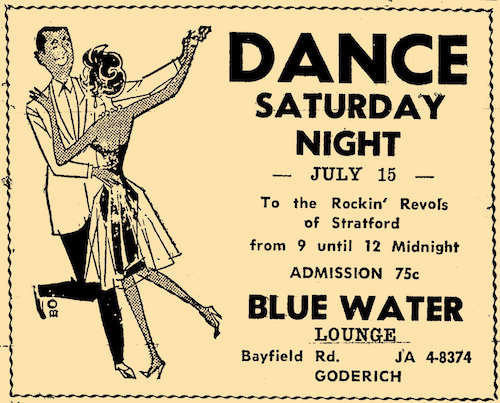
Lewis' research uncovers some much needed new information about Manuel's formative Stratford roots and the rise of his hardworking Revols. We learn that Manuel and his bandmates, including guitarist John Till (later of Janis Joplin's backing band Full Tilt Boogie) and bassist Ken Kalmusky (later of Ian & Sylvia's Great Speckled Bird) performed all over southwestern Ontario, from Port Dover to Port Elgin, from London to Mitchell and Seaforth and to church basements, YMCAs and dancehalls along the Lake Huron shore from Grand Bend and Bayfield to Goderich.
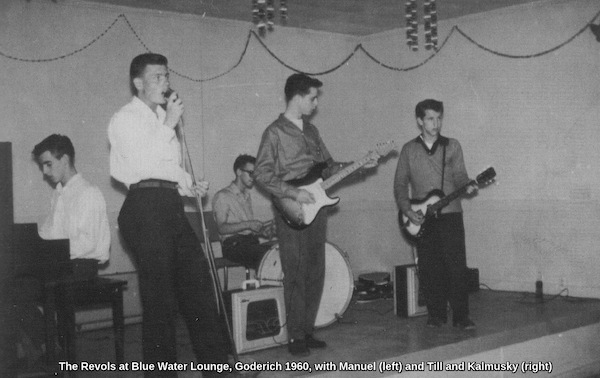 Booked by their manager Dave Michie (later the legendary radio deejay David Marsden), the Revols, beginning in 1959, introduced rock 'n' roll and rhythm 'n' blues, including Manuel's deep love of Bobby Bland and Ray Charles, to small-town teens hungry for the new sounds.
And Lewis cites a rare recording the Revols, teenagers themselves, made in 1960 at radio station CKSL-AM in London. It includes two of Manuel's earliest songs, plus a rockabilly rendition of Frank Liszt's "Liebestraum," which shows off both Manuel's classical training and his wild piano style.
Click here to listen to the Revols' radio recording
Today, Manuel is well honoured in Stratford, with a street named after him, a plaque on his childhood home, a memorial bench by the Avon River and a mural featuring him and his Revol bandmates Till and Kalmusky. There's also a music scholarship set up in his name at the University of Western Ontario.
 Manuel took his own life, at the age of 42, in a Florida hotel room on March 4, 1986 during a Band tour that didn't include Robertson,. His death was something that many had seen coming for some time. Three years earlier, after the Band's first reunion concert at Toronto's CNE Bandstand, I had interviewed Helm and Rick Danko in a restaurant atop the CN Tower. The interview continued back at the Harbour Castle Hilton hotel, where the Band was staying. Afterwards, as Helm walked me to the elevator, a ghostly figure came towards us in the hallway. It was Manuel. He was expressionless as he floated past; his eyes glassy and vacant. Helm just shook his head. It was a chilling sight and one I've never forgotten.
Although the tragedy of Richard Manuel hangs over this biography (we all know the grim end is coming), it's a testament to Lewis' fine work that his subject's talent and legacy still shines through. Ultimately, that is the book's greatest gift.