Toronto’s Queen Street, the portion running west from stately University to cosmopolitan Spadina, was originally a jumble of greasy spoons, barbershops and clothing stores. Owners lived above their shops, while children played on sidewalks. There were even a couple of watering holes that supplied the mostly Irish, Jewish and Eastern European locals with cold, cheap draft beer. By the late 1970s, those bars had become part of a fertile breeding ground, a creative hothouse of forceful protest, stylish adventure and uninhibited experimentation that produced an explosion of musical talent. In many ways, it paralleled the city’s fabled Yorkville scene of the previous decade, with a tight concentr...
Music journalism, books and more
When Peter Gabriel launched the first WOMAD festival in 1982—on a Somerset fairground with China's Tian Jin and the Burundi Drummers—non-Western music was virtually unknown in the pop world. Today, world music gets mainstream attention in publications such as Billboard, which has a regular world music chart. And its recordings, once hidden in the back of record stores in dusty international sections, receive prominent front-racking. Just check out the vast world-music display at HMV's megastore on Yonge St. Meanwhile, worldbeat's diverse sounds are featured in popular weekly radio shows like Global Rhythms, heard Saturday mornings locally on CIUT-FM. Toronto, in fact, is a hotbed for world m...
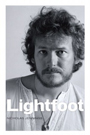
On a blustery night in November 1975, Gordon Lightfoot was sitting in his writing room on the third floor of his Beaumont Road house in Toronto’s Rosedale neighbourhood, working on songs for his next album. Needing more fuel for the task, he headed downstairs to his kitchen for coffee. A report on the 11 p.m. CBC news told him of the sinking of a giant freighter, the SS Edmund Fitzgerald, in a fierce storm and the loss of all 29 men aboard. “I remember it so well,” Lightfoot told biographer Nicholas Jennings. “The wind was howling even in Toronto that night, and I went back up to the attic thinking, ‘I wonder what it’s like up on Lake Superior. It must’ve been awful. I didn’t ...
Jumbie in the Jukebox is full of Kobo Town frontman Drew Gonsalves’ usual lyrical invention and his band’s musical audacity and infectious grooves. Ghosts jump out of the tracks, from the clanging bells of “Mr. Monday,” about a fallen man who loses his fortune to mental illness, to the groaning trombones of “Joe the Paranoiac,” about a conspiracy theorist who believes his neighbors are terrorist members of sleeper cells. “The War Between Is and Ought” uses scratchy vocals and a traditional santimanitaymelody to tell the tale of two feuding kings, while “The Trial of Henry Marshall,” written in the style of an early kalenda with a call-and-response chant, is about an innoc...
“Trains and Boats and Planes” is the title of a Burt Bacharach song about love lost to travel. The phrase also perfectly captures Gordon Lightfoot’s lifelong fascination with the machinery of those forms of transportation and, more poetically, tales of romance and tragedy involving them. So many of Lightfoot’s songs reflect this interest. Three of his most famous compositions, “Canadian Railroad Trilogy,” “The Wreck of the Edmund Fitzgerald” and “Early Morning Rain,” tell of the building of the trans-Canada railway, the sinking of an iron-ore-carrying freighter and of big 707 jetliners taking off without a young homesick Lightfoot aboard. Throughout his l...
Today is the 60th anniversary of Bob Dylan plugging in his guitar at the Newport Folk Festival, an event blown up into the book Dylan Goes Electric! The Night That Split the Sixties which, in turn, inspired the recent film A Complete Unknown. While much is made of Dylan’s now mythical July 25, 1965 appearance with the Paul Butterfield Blues Band, the pairing pales in comparison with the huge role that Toronto’s Levon & the Hawks (later The Band) played in transforming the folk icon into a rock trailblazer. It began quietly one night that September when Dylan flew up to Toronto to check out a super-tight rock group at Friar’s Tavern recommended to him by Mary Martin, ...
For Canada Day, I’m posting this photo of my prized Japanese issued picture sleeve copy of Ian & Sylvia’s classic “Four Strong Winds,” which might well be considered Canada’s unofficial national anthem. The fact that the song travelled all the way to Japan speaks to its power as a brilliant ballad with a universal message. And yet its distinctly Canadian. It’s been covered by many, including The Journeymen, The Seekers, Judy Collins, Chad Mitchell Trio, Marianne Faithfull, The Searchers, John Denver, The Kingston Trio, Trini Lopez, Waylon Jennings, Chad & Jeremy, Blue Rodeo, Joan Baez, Glenn Yarborough, Harry Belafonte, Tony Rice, Johnny Cash, The Carter Family, David Wiffen and Sara...
Trend Records holds a special place in Canadian music. Launched in 1965 by Merv Buchanan, the tiny label welcomed emerging artists at a time when Canada’s big record companies were looking the other way. It served as the launching pad for countless acts and released the first recordings by stars like Roy Kenner, singer with Mandala and Bush, and Triumph’s Mike Levine. Future members of Klaatu, Trooper and even Rush’s manager Ray Danniels all got their start with bands on Buchanan’s upstart label, which also released Bent Wind, whose Sussex album is holy grail for record collectors. This compilation is the first chapter in the amazing story of Trend Records. As disc jockey Tommy Tre...
England was basking in an unseasonably warm and bright afternoon one play last week. Paul McCartney, however, was spending it enveloped by darkness and fog, as he had done for most of the preceding month. Yet the famous ex-Beatle’s mood could hardly have been sunnier. On Soundstage 6 at the Goldcrest Elstree Studio complex north of London, shrouded by dry ice, McCartney enthusiastically kicked into a performance of “Sgt. Pepper’s Lonely Hearts Club Band.” He was rehearsing for his most significant career move since the breakup of The Beatles in 1970. Buoyed by the critical success of his latest album, Flowers in the Dirt, and excited about the sound of his new band, McCartney is embarki...
In the mid-1960s, Toronto was teeming with pop groups and teenagers inspired by the Beatles and the Rolling Stones. One of the city’s most popular bands, however, took its cues not from the British Invasion but from the rhythm-and-blues sound of American artists such as Otis Redding and Wilson Pickett. That band was the Mandala. With a dazzling stage show featuring choreography, strobe lights and sonic effects, the Mandala became a sudden sensation. Dressed like costumed gangsters in striped suits, black shirts and white ties, the five members took their self-styled “soul crusade” across Canada, down to New York and out to Los Angeles, earning rave reviews for fever-pitched concerts that cri...