Today is the 60th anniversary of Bob Dylan plugging in his guitar at the Newport Folk Festival, an event blown up into the book Dylan Goes Electric! The Night That Split the Sixties which, in turn, inspired the recent film A Complete Unknown. While much is made of Dylan’s now mythical July 25, 1965 appearance with the Paul Butterfield Blues Band, the pairing pales in comparison with the huge role that Toronto’s Levon & the Hawks (later The Band) played in transforming the folk icon into a rock trailblazer. It began quietly one night that September when Dylan flew up to Toronto to check out a super-tight rock group at Friar’s Tavern recommended to him by Mary Martin, ...
Music journalism, books and more
On the night of January 9, 1974, my buddy Bill Gardner and I joined the flood of people pouring out of Maple Leaf Gardens, babbling with excitement over what we’d just witnessed: a two-hour-plus concert by Bob Dylan and The Band who’d stoned us with the raucous opener “Rainy Day Women” and dressed us so fine with the euphoric penultimate “Like a Rolling Stone, asking us how we felt. As if we needed to be asked. The elation carried us along Carlton Street, undimmed despite nostril-freezing temperatures and a sudden snow squall. “Wanna go for drinks?” asked Bill. “Ronnie’s playing down at the Nick.” The thought of seeing Ronnie Hawkins on the same night and in the same building where Dylan had...
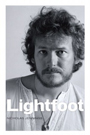
More than any other singer-songwriter, Gordon Lightfoot personified Canada. His robust songs about winter nights, morning rain, being bound for Alberta and sailing on Ontario’s Georgian Bay came closest to expressing for many Canadians the essence of life in the Great White North. Historical epics stood alongside romantic ballads. Author Pierre Berton once said that Lightfoot’s “Canadian Railroad Trilogy” conveyed as much about the building of the national railway as his own best-selling book on the subject. When Lightfoot died Monday evening at the age of 84, leaving a vast legacy of more than 500 songs, Canada lost a masterful composer, a distinctive vocalist and one of its ...
A master of reinvention, Bob Dylan is never content to play a song the same way twice. Last night at Massey Hall, the self declared song-and-dance man entertained with interpretations of numbers drawn from his own back pages (with the exception of a Grateful Dead cover and an American Songbook standard) that rendered them virtually unrecognizable. Sometimes this was a thrilling novelty, with a hatted Dylan standing behind a grand piano and belting out a bluesy, saloon-style rendition of “I’ll Be Your Baby Tonight” like an less frenzied Jerry Lee Lewis. At other times, it was a frustrating mystery. Trying to identify a song by lyric wasn’t always possible because of Dylan’s chronic case of mu...
Stepping off a Greyhound bus from Toronto in 1961, a 17-year-old boy found himself in West Helena, Ark., by the banks of the Mississippi River, unable to believe his senses. “It smelled different and moved different,” Robbie Robertson recently recalled. “The people talked and dressed different. And the air was filled with thick and funky music.” The experience left an indelible impression on the budding guitarist and songwriter. Years later, Robertson drew on it to write some of rock’s most evocative songs—including “Up on Cripple Creek” and “The Night They Drove Old Dixie Down.” And he performed them with his group, The Band, which critic Greil Marcus has called “the best rock ’n’ roll band...