 If an artist’s worth can be gauged by the degree to which his artistry evolves, then Bruce Cockburn’s value has grown immeasurably with each passing album. Over the course of 32 years and nearly as many recordings, the legendary Canadian singer-songwriter has always pushed the musical envelope. Never one to rest on his creative laurels, he has constantly tried on new ideas without ever abandoning the fabric of earlier material. The result is a rich body of work—deep, diverse and never disappointing—that stands the test of time and includes some of the most sophisticated and evocative songs in pop music.
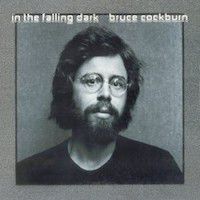
Originally released in 1976, In the Falling Dark was the first of a trilogy of recordings that bridged Cockburn’s acoustic work of the early ’70s with his electric period a decade later. Stylistically adventurous, it featured more jazz textures than folk influences, reflecting Cockburn’s long-time love of John Coltrane and Wes Montgomery, and showcased the daring, improvisational interplay of flute and horns. In the Falling Dark was also the first collection of songs that fully explored Cockburn’s deepening Christian faith, with numerous songs of praise and worship. But, far from fundamentalist or evangelical in tone, those songs—like all of his spiritual material—could be
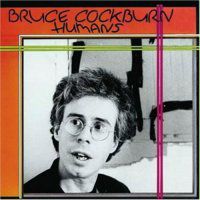 Ranked by many people as Bruce Cockburn’s best album, Humans is a watershed release in the acclaimed Canadian singer-songwriter’s stellar career. It came in the midst of tumultuous change in Cockburn’s life, following the breakup of his 10-year marriage and his move from the country to the city. After a decade of rural existence, living in a camper and then settling in tiny Burritt’s Rapids, south of Ottawa, the longtime loner took up residence in downtown Toronto. It was, he told reporters at the time, a deliberate test of his faith. “I moved with the express purpose of absorbing myself in human society to see what it was,” said Cockburn. “If, as a Christian, I was being asked to love my fellow human beings, I couldn’t love them very well if I didn’t know anything about them.”
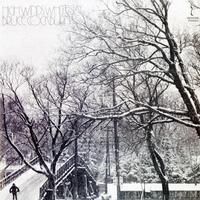 The stark black and white cover photo speaks volumes about Bruce Cockburn in the early 1970s. He stands alone at the foot of a bridge, surrounded by snow-capped trees, looking like what writer Jack Batten then described as a “splendid survivor of Robin Hood’s merry men dressed in leather jerkins and boot-high moccasins.” At the time, the rising singer-songwriter possessed a deep fascination with the wilderness and things medieval—especially Renaissance music. And although already on a quest, Cockburn had not yet embraced his particular brand of Christianity. He was, in his own words, a “spiritual loner who sought truth in nature.”
 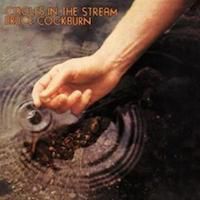 One of the marks of a great live album is the ability of the artist to inject his material with new vitality, to the point where even well-known songs take on fresh meaning. Bruce Cockburn did exactly that with Circles in the Stream, which caught the Canadian folksinger at the culmination of his first tour with a full band. That group provided the kind of intelligent and intuitive accompaniment that creates an inspired—and inspiring—concert experience. “It’s amazing to hear how tight we are together,” percussionist Bill Usher once recalled, on hearing the recording. “We’re all hitting the same accents at the same time and in harness with each other.”
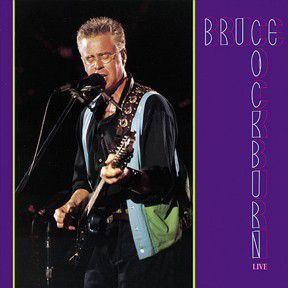 Over the years, Bruce Cockburn concerts have evolved from solo performances in moccasins into full-band gigs in army boots. In the beginning, Cockburn travelled around in an old camper truck, a vagabond poet with acoustic guitar in hand and faithful dog, Aroo, at his feet. During the ’80s, he and his group toured in a large streamlined bus, dressed like urban guerrillas wielding an arsenal of electric instruments. By the end of that decade—and for much of the next—Cockburn downsized and performed with just a pair of talented sidemen. But as his superb live recordings reveal, regardless of the era or the size of his entourage, Cockburn’s concerts are always a wonder to behold: expansive, entrancing and full of surprises.