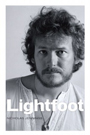
Gordon Lightfoot tips his hat to his friend Jerry Jeff Walker, who sadly passed away on October 23. The "Mr. Bojangles" singer once gave Lightfoot his favourite piece of clothing: a jacket made of three kinds of leather, tie-dyed to look like autumn leaves. "I loved that jacket, and I guess that’s how much I loved Gordon," Walker told Lightfoot biographer Nicholas Jennings. Added Walker with a laugh: "I thought [Gord] needed it for his image--loosen him up a bit." Lightfoot wore the jacket on the cover of his Don Quixote album. R.I.P. Jerry Jeff.
Music journalism, books and more
Someone once dubbed his singing style “country-and-Lightfoot,” and there’s certainly some truth to it. With his distinctive nasally twang, there’s always been a big streak of country running through Canada’s greatest folk singer and songwriter. Just look at Gordon Lightfoot’s history: In 1959, Lightfoot joined CBC’s Country Hoedown, as part of the cast of the Singing’ Swingin’ Eight. The show’s set was a makeshift barn, complete with wagon wheels and bales of straw. Members of the Singin’ Swingin’ Eight (four men and four women) wore yoked cowboy shirts and gingham crinoline. Can you spot Lightfoot?Lightfoot travelled to Nashville with Chateau Records’ Art Snider in 1962 and recorded hi...
It is a particularly eerie case of life imitating art. In Paul Quarrington’s novel Whale Music, rock musician Desmond Howell writes a song called “Claire” that unexpectedly becomes a hit single. Recently, the Rheostatics, a Canadian rock band with no previous hit singles to its credit, recorded a sound track for the film adaptation, including their own version of “Claire.” The song, a dreamy slice of melodic pop, is now getting airplay on commercial radio stations across Canada, exposing the critically acclaimed group to its largest audience to date. “Normally, we just follow our instincts on our albums,” admits guitarist Dave Bidini. “Here, we got a chance to pretend to be someone else...
A round up of the best reviews from Canadian and American magazines and newspapers: “Perhaps the greatest gift of Lightfoot is that [it leads] you right back to [his] music. Feels like you never left, only better.” Maclean’s magazine “an informative, highly readable book...Lightfoot fans should rejoice.” Globe & Mail “This portrait of a stoic, deeply talented and driven man is an engaging and moving one. An essential read for anyone who cares about late 20th century troubadours.” Buffalo News “Jennings as always is a master storyteller . . . His deft manipulation of narrative, told in clear language, draws the reader in immediately . . . Jenning...
Dallas and Travis Good have worked with Neil Young, author Margaret Atwood, Randy Bachman, Buffy Sainte-Marie and actor Gordon Pinsent. But it was another Canadian icon—one with whom they’ve yet to collaborate—who offered some crucial wisdom. It was 1996, when their band the Sadies was getting started, and Dallas’ and Travis’ father, Bruce, of bluegrass heroes the Good Brothers, was celebrating his 50th birthday at Toronto’s Horseshoe Tavern. Into the club walks Gordon Lightfoot, who’d had the senior Goods open for him during the 1970s. “Afterwards,” Travis recalls, “Lightfoot turned to us and says, ‘The only advice I’ll give you is do your own songs.’ We took heed and started getting rid of...