For defunct rock groups, 1983 has become the year of the reunion. Among the acts from rock’s golden years re-forming are The Guess Who, The Animals, The Hollies and Simon and Garfunkel. But the most unexpected return is that of The Band, Canada’s most celebrated rock ensemble. Its farewell concert seven years ago was so lavish and final that it made any suggestion of reunion seem dishonest. Now, with a two-week, 11-city Canadian tour that included a July 4 stop in Toronto (at the CNE Bandshell), The Band is back, although without the services of guitarist Robbie Robertson. From the heady days of the southern Ontario bar circuit in the 1960s to Martin Scorsese’s touching movie tribute, T...
Music journalism, books and more
The photographer was posing Ray Materick, his band and some promotion types for a casual group shot in the dressing room of Toronto's El Mocambo. They sat themselves around a table strewn with cigarette butts, guitar picks and a half-drained 40 ouncer of whiskey, waiting to be focused. Materick and his musicians had just finished a well-received first set downstairs and now, on cue, everyone began hamming it up for the benefit of the camera. “Just one more,” promised the photographer. Ironically, the walls behind them sported a colourful collage of assorted rock star faces. All the most successful performers, the Lightfoots, the McLauchlans and the Dylans were up there, staring out from the ...
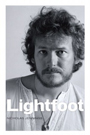
By the mid-1960s, Gordon Lightfoot was spending more and more time drinking and hanging out with Ian Tyson and Ronnie Hawkins. Bar crawls on Yonge Street weren’t always possible, since the three would often be working. But Hawkins, who pretty much had the run of Le Coq d’Or, kept the place open and made sure the club’s go-go dancers stuck around so he and his buddies could trade songs and party with the girls long after closing. Lightfoot had even written a wistful lament about one of the dancers, “Go Go Round,” which became a hit record for him in early 1967 and was ultimately featured on his album The Way I Feel. Friendship with Hawkins led Lightfoot to write another song. It all stem...
The beer was flowing freely as waitresses served platters of breaded shrimp, gourmet pizza and chicken wings. But it was not the regular hockey crowd at Gardoonie’s, a popular watering hole opposite Toronto’s Maple Leaf Gardens. Instead, more than 300 people were gathered there last week to pay tribute to a rock ‘n’ roll legend. Standing amid the hockey memorabilia on the walls, Ronnie Hawkins was beaming as he surveyed the crowd. Officially, the lavish party was being held to launch Let it Rock!, his 26th album and the accompanying video that captures his recent 60th birthday concert at Toronto’s Massey Hall, featuring such rock luminaries as Jerry Lee Lewis, Carl Perkins and The ...
The Beatles changed the world in countless ways, but they also dramatically changed Toronto over three consecutive years of performances (1964 to 1966) at Maple Leaf Gardens. Almost overnight, the city was hit with a cultural shift of seismic proportions: Boys grew Beatle bangs, girls pinned photos of John, Paul, George and Ringo on their walls and parents worried about the sanity of their teenaged children. Canada’s folk darlings Ian & Sylvia had ruled up to that point, but as the male half of that duo, Ian Tyson, remembers, “the minute the Beatles arrived, it was over—well and truly over.” The folk boom slowed, as every kid on the block rushed to form rock bands. Toronto’s music scene ...
One of America’s finest singer-songwriters (Johnny Cash, Bette Midler and Bob Dylan have all covered him), the Chicago native specializes in razor-sharp observations of ordinary lives. Dylan once said of him: "Prine's stuff is pure Proustian existentialism. Midwestern mindtrips to the nth degree. All that stuff about Sam Stone, the soldier junky daddy, and Donald and Lydia, where people make love from ten miles away. Nobody but Prine could write like that. " Prine's first album of new songs in 13 years is full of such gems, including “Knocking on Your Screen Door,” and a wry look at the afterlife, “When I Get to Heaven.” It's a heartfelt collection about the search for meaning in everyd...
Folksingers, the troubadours who inhabited so many coffeehouses and festivals two decades ago, had become an endangered species by the early 1980s. But recently, as rock returned to its roots, folk music has quietly staged a comeback—through adventurous festivals and such popular artists as Suzanne Vega and the punk-influenced Billy Bragg and Michelle Shocked. Two singer-songwriters who have influenced the new wave of folk, John Prine and Steve Goodman, have new recordings out on Edmonton’s Stony Plain label. Their albums reveal the source of folk’s strength: songs of intimacy and insight. Goodman, who died in 1984 after a long battle with leukemia, and Prine, Goodman’s close friend, rank am...
My editor thinks Elvis Costello’s latest album, North, is a lot like Frank Sinatra’s 1954 classic In the Wee Small Hours. He’s right: both recordings are intimate explorations of emotional loss and the rush of new romance. On top of that, the string-backed piano ballads pack an immediate, visceral punch despite their spare instrumentation. When Costello calls, I mention the comparison. “That’s very flattering,” he says from the back of a limousine speeding along the Autobahn somewhere between Berlin and Hamburg. “Sinatra’s album is a masterpiece.” Then he brings up the Diana Krall factor: “People have made assumptions based on changes in my life that the appearance of quiet sounds,...
It has been 24 years since Joni Mitchell left Saskatoon and eventually arrived on the coffeehouse circuit in Toronto’s Yorkville district. And although she has returned occasionally from her home in Los Angeles to visit her parents, last week was different. Under the glare of the media spotlight, Mitchell was back in Saskatoon for a triumphant homecoming. And the veteran singer-songwriter chose the Bessborough Hotel—where she often attended high-school dances—to meet the press on the western leg of a publicity tour to promote Chalk Mark in a Rain Storm, her best album in years. Donning a school beanie presented by three students at her old school, Aden Bowman Collegiate Institute, the 4...
By the summer of ’67, Yorkvilleʼs hippies found themselves choking on exhaust fumes from bumper-to-bumper traffic. Reduced to curiosities for the passing, pointing motorists, many resented the way their community was being taken over by tourists gawking at the longhairs. Kids started demanding that Yorkvilleʼs streets be closed to cars. The Diggers seized on this and the issue became the hippiesʼ new mantra. Yorkville had been a thorn in the side of Toronto the Good for some time. But in the heat of that summer, the problems came to a head. Cops in the village started hassling kids with a “move-along, move-along” attitude. Politicians, meanwhile, railed against the presence of runaway youths...